Vermont has five resorts that most skiers shortlist for a destination trip: Stowe, Killington, Stratton, Sugarbush and Jay Peak. They feel nothing alike on the mountain. One is a sprawl of six linked peaks, two are split across separate mountains, one is a single compact face, and one is built around a tram and its glades. This comparison covers size, layout, how hard each is to find your way around, terrain by ability, base areas and crowds, so you can pick the right one before you book.
Stowe Mountain Resort
Size and layout: Stowe covers 485 skiable acres with 116 trails, 12 lifts and 2,360 feet of vertical, set on Mount Mansfield, which at 4,395 feet is Vermont's highest peak. It is really two mountains: Mansfield on one side of VT-108 and Spruce Peak on the other, joined by the Over Easy transfer gondola.
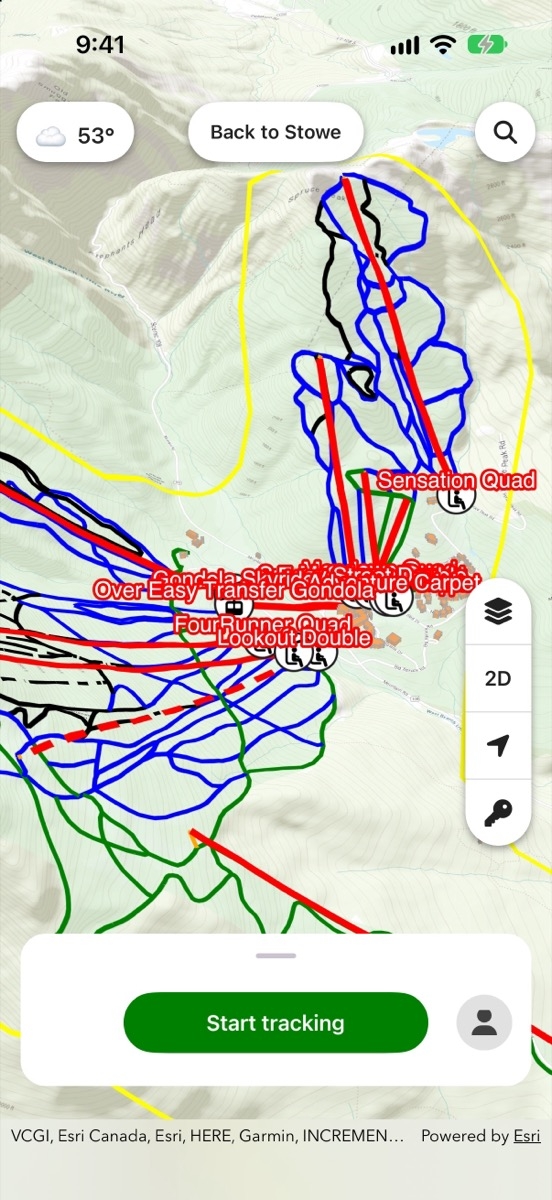
Navigation: Moderate. Each side is easy to read on its own, but first-timers often end up on the wrong mountain at lunch or at the end of the day. The main thing to learn is which base your car or lodging is at and where the transfer gondola sits. Our Stowe trail map guide walks through both sides lift by lift.
Terrain: According to Stowe's Wikipedia entry, the trail mix is roughly 16% beginner, 55% intermediate and 30% advanced. Spruce Peak has the best beginner area, with a learning complex served by two short lifts. Experts head to the FourRunner quad for the Front Four: Starr, National, Goat and Liftline. The Toll Road gives intermediates a 3.7-mile cruise.
Crowds and best for: Stowe is very popular and lift lines get long at peak times. It suits mixed groups who want classic steeps and a proper beginner zone in the same place.
Killington Resort
Size and layout: Killington is the largest resort in the East, with about 1,509 acres, 155 trails, 22 lifts and a 3,050-foot vertical drop running from a base at 1,165 feet to a summit at 4,241 feet. The terrain spreads across six peaks: Killington Peak, Skye Peak, Bear Mountain, Ramshead, Snowdon and Sunrise, all linked by lifts and trails.
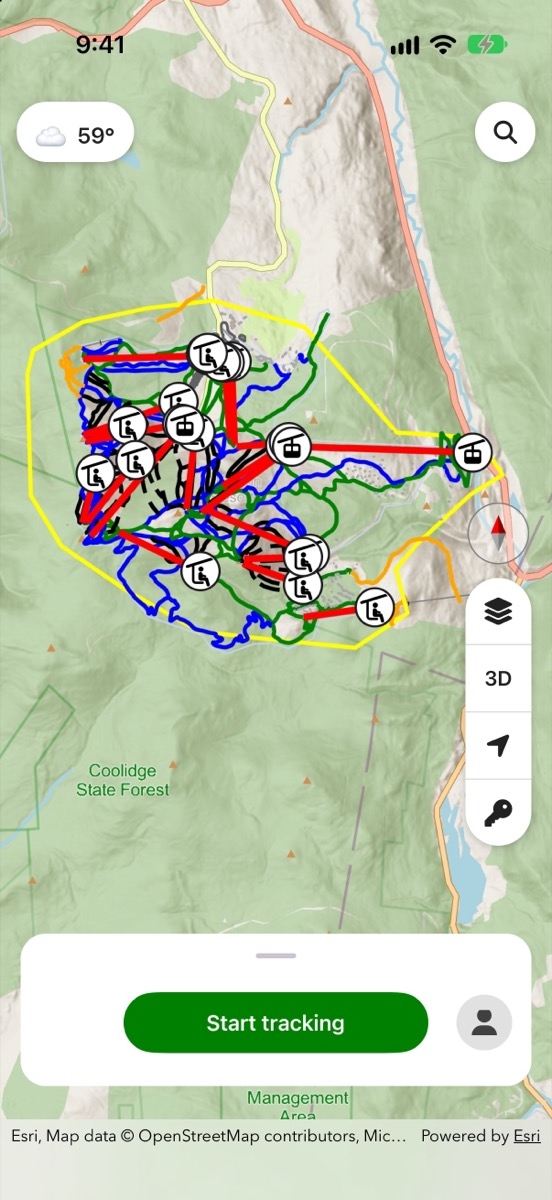
Navigation: The hardest in Vermont. Several separate base areas, crossover trails between peaks and a dense lift network make it easy to drift into terrain above your level, or to end the day a long way from your car. Plan your route back to base before mid-afternoon. The Killington trail map guide breaks the resort down peak by peak.
Terrain: Every ability is covered, but the zones are spread out. The Snowshed and Ramshead base area has learning lifts right by the lodges, with Snowdon Six, the K-1 Express Gondola and Superstar Express Six climbing toward the peak over blue and black runs. For experts, Vertigo off Skye Peak is the steepest trail that isn't a glade, and Catwalk off Killington Peak is a hike-to challenge.
Bases and access: There are several ways in. The Skyeship gondola loads from US-4, away from the Snowshed and Ramshead base, and Bear Mountain and Sunrise sit at their own corner of the resort. Park where you plan to finish the day.
Crowds and best for: All that acreage spreads skiers out, though the main base lifts get busy on weekends. It is best for strong intermediates and experts who want variety over a long trip.
Stratton Mountain
Size and layout: Stratton has about 625 skiable acres, 99 trails and 2,003 feet of vertical on one mountain, with a 3,875-foot summit. It has 14 lifts, including a gondola and high-speed six-packs, all feeding back to a single base village.
Navigation: The easiest of the five. Everything comes back to one base, so getting lost usually just means taking a different run down to the same place. The mountain is split into a few zones with clear characters. Our Stratton Mountain trail map guide shows how those zones connect.
Terrain: Beginners get the Learning Zone near the base lodge, where the Cub Carpet and the American Express lift lead to gentle runs like Lower Tamarack and East Meadow. Intermediates spend most of their time on the Ursa and Snow Bowl lifts. There are steeper pitches and glades higher up, but Stratton is known first for consistent grooming.
Crowds and best for: On busy days, Snow Bowl is usually the quieter lift. Stratton is the best fit for families and intermediates who want efficient lifts and a simple layout.
Sugarbush Resort
Size and layout: Sugarbush has 484 skiable acres, 111 trails, 16 lifts and 2,600 feet of vertical, split between Lincoln Peak and Mt. Ellen. Lincoln Peak is the main area, with 72 of the 111 runs and a 3,975-foot summit. The two mountains are linked by the Slide Brook Express quad. The official Sugarbush site puts the full 2,600 vertical feet across the two mountains. Mt. Ellen also has Vermont's highest chairlift.
Navigation: Moderate. Lincoln Peak has several sub-peaks (Gadd, Castlerock and North Lynx), so it takes a few runs to learn how they fit together. Crossing to Mt. Ellen is a commitment, so time it with the lift's hours. The Sugarbush trail map guide explains the two-mountain layout.
Terrain: Lincoln Peak covers everything from beginner groomers to the challenging Castlerock Peak. Mt. Ellen is better for long cruisers and glades that see less traffic. The 3-mile Stein's Run gives intermediates plenty of mileage.
Bases and access: Most of the lodging is at Lincoln Peak, and the resort is about 50 minutes from Burlington International Airport. Mt. Ellen's base is quieter and more old-school.
Crowds and best for: Mt. Ellen is the release valve when Lincoln Peak is busy. Sugarbush suits skiers who want expert terrain and real character without Killington's size.
Jay Peak Resort
Size and layout: Jay Peak sits in the Northeast Kingdom, a few miles south of the Canadian border. It has 385 acres, around 80 trails and 9 lifts, including Vermont's only aerial tram, with 2,153 feet of vertical from a 1,815-foot base. It is also one of the snowiest resorts in the East, with average snowfall usually quoted above 300 inches.
Navigation: Fairly easy on groomed trails, much harder in the trees. The resort is compact, but a lot of the best skiing is in glades, where it's easy to lose track of where you'll come out. Know which lift each glade drains to before you go in. Our Jay Peak trail map guide covers the tram side and the glade exits.
Terrain: Jay Peak is best known for tree skiing and powder. Beginners still do well in The Zone, an 80-acre learning area with wide, gentle trails and introductory glades.
Crowds and best for: Its remote location keeps crowds lower than at the southern resorts, but getting there means a trip to the far north of the state. The payoff is deep snow and glades, which makes it the pick for advanced skiers chasing powder.
Which Vermont resort should you choose?
First trip or nervous beginners: Stratton. One base, a simple layout and a dedicated learning area mean little chance of getting lost. Family with a beginner and an expert: Stowe, where the beginner can stay on Spruce Peak while the expert skis the Front Four. Long trip, strong intermediates: Killington, for sheer size, as long as you plan your routes between peaks. Experts who want steeps with character: Sugarbush, for Castlerock and the quieter glades on Mt. Ellen. Powder and glades: Jay Peak, if you can make the drive north.
