Most ski trips involve picking a mountain. At Whistler you get two big ones. Whistler Mountain and Blackcomb Mountain sit side by side in British Columbia's Coast Mountains, about two hours north of Vancouver. Together they make up 8,171 acres of skiable terrain, the largest ski resort in North America. The Peak 2 Peak Gondola joins the two near their summits, so you can ski the alpine of both mountains in one day without going back down to the valley. If you want size, alpine bowls and a lift that is worth riding for its own sake, Whistler belongs on your list. If you want a quiet, simple ski day, it probably does not.
Two full mountains, not one mountain with an annex
Each mountain would be a major resort by itself. According to Wikipedia's Whistler Blackcomb entry, Whistler Mountain has 1,530 m (5,020 ft) of vertical and tops out at 2,182 m. Blackcomb has a little more vertical at 1,565 m (5,133 ft) and a summit of 2,240 m. Whistler Mountain alone has 4,757 acres of inbound terrain. Each mountain also has a top-to-bottom run 11 km (6.8 mi) long: Peak to Creek on Whistler and Green Road on Blackcomb.
The two mountains feel different. Whistler Mountain is known for wide bowls and long, scenic cruisers. Blackcomb's roughly 3,414 acres lean more advanced, and its high alpine lifts lead to its steepest terrain. Because of that, a week here rarely gets repetitive, and you can choose a mountain each morning to suit the conditions and your mood.
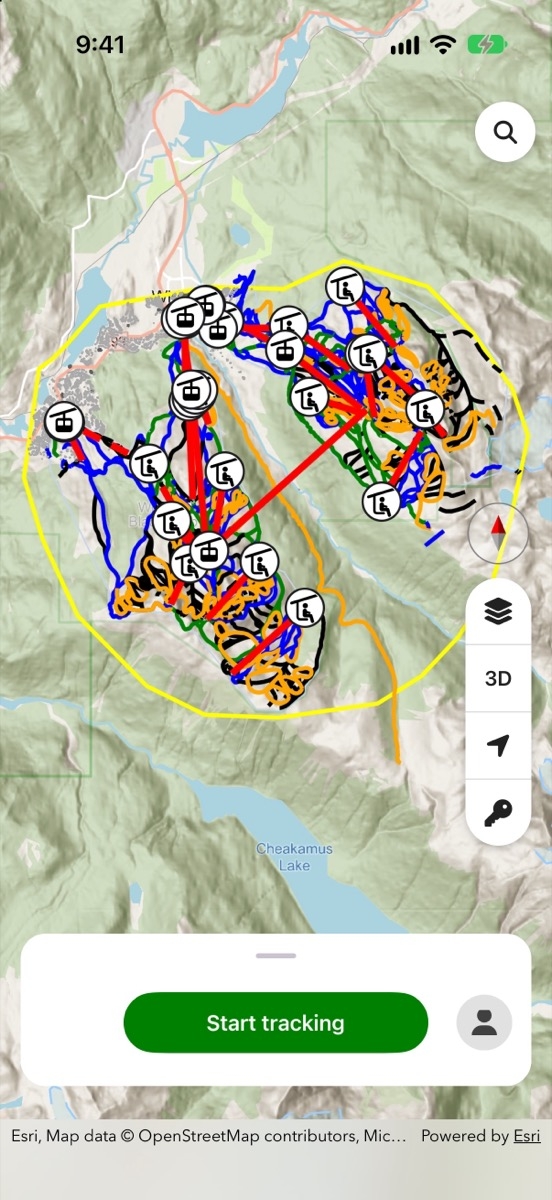
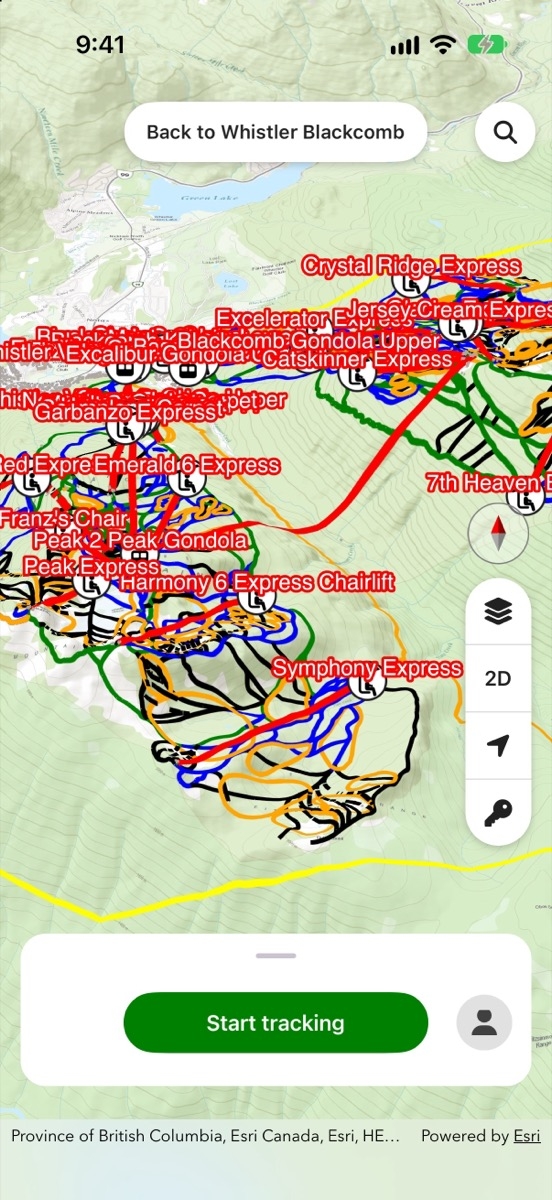
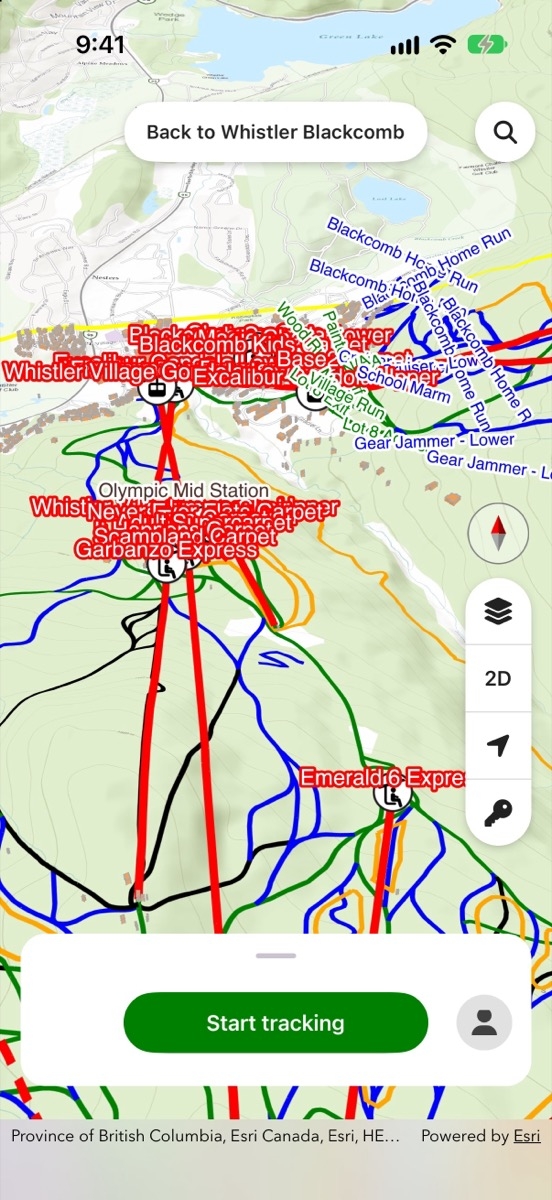
With this much terrain, the trail map affects whether your day goes well. Linking lifts across two mountains is easy to get wrong, and a wrong turn can cost you a long ride back. The Whistler Mountain Map app covers how to get around in detail. This article sticks to whether the trip is worth making.
The Peak 2 Peak Gondola
Some people come to Whistler just for this lift. The Peak 2 Peak is a tricable gondola that crosses the Fitzsimmons Valley between the two mountains in about eleven minutes. Its builder, Doppelmayr, lists it at 4,400 m long, with a 3,024 m stretch between towers and a maximum height of 436 m above the valley floor. It held the world record for the longest span between ropeway towers until 2017. It is still the highest gondola above the ground anywhere.
The ride does a practical job too. Before it opened, switching mountains meant skiing down toward the village and riding back up. Now you can ski Whistler's alpine in the morning, cross over, and finish the day on Blackcomb. For a visitor with only a few days, that makes it far more realistic to sample both mountains.
Signature terrain: bowls, glaciers and Spanky's Ladder
Whistler's real draw is the high alpine terrain. On Whistler Mountain, Peak Express takes you to one of the highest points at the resort and to Whistler Bowl, a wide-open bowl that can be soft and creamy or a steep bump field, depending on conditions. Nearby, West Bowl and Bagel Bowl are reached from the upper section of Peak to Creek. They are advanced open bowls that are at their best after fresh snow.
On Blackcomb, the 7th Heaven lift reaches bowl skiing above the treeline with some of the best views at the resort. It also connects to the Showcase T-bar, which leads to another bowl. The Glacier Express reaches the Blackcomb Glacier, which feels close to backcountry skiing while staying inside the resort boundary.
The best-known expert zone is Spanky's Ladder. From the top of the Glacier Express you traverse across and then hike up a short, steep bootpack. That puts you above four gemstone-named bowls: Garnet, Ruby, Diamond and Sapphire. This is double-black terrain with cliffs, rocks, mandatory entrances and snow that varies a lot, and it is only open when avalanche conditions allow. Ruby is generally the easiest way in. Strong skiers often call it the closest thing in North America to the classic steeps of the European Alps.
Who Whistler suits, and who it does not
It suits:
- Advanced and expert skiers who want alpine bowls, chutes and glacier terrain, with enough of it to fill a week.
- Mixed-ability groups. There are groomed cruisers and green runs at the bottom of both mountains, so everyone can ride the same gondolas and meet up.
- Anyone who likes a ski day that covers a lot of ground. Two summits, an 11-minute gondola crossing and 11 km runs make long days feel varied.
It may not suit:
- Skiers looking for a quiet hill. Whistler Blackcomb often gets more than two million visits a year.
- Anyone staying only a day or two who wants to feel they have covered the mountain. You won't, and part of the appeal is knowing there is more left.
- Nervous intermediates who want to ski the famous terrain. The headline zones are serious, and some are open only when avalanche conditions allow.
If you like British Columbia but prefer a smaller, calmer mountain, Fernie Alpine Resort is a regional alternative with a very different feel.
Plan your visit
The resort's official when-to-visit guide breaks the season down by month:
- Early season (mid-November to late December): November averages about 2.4 m of snow, with smaller crowds.
- After the holidays: the resort says the week after the holidays is one of the quietest of the season, and the most terrain is open.
- March: locals call it "powder month" because it averages about 2.5 m of snow on top of a deep base.
- Spring: the season usually runs into May.
If you only do one thing on a first visit, cross the Peak 2 Peak in the middle of a ski day. Ski Whistler's alpine in the morning, ride across to Blackcomb, and finish under 7th Heaven. You will see how big the place is and why it has two separate mountains' worth of terrain. For lift and terrain details before you go, the Whistler Blackcomb resort page has everything in one place.
The verdict
Whistler is worth the trip because of its scale. You get two full mountains, more than 8,000 acres, alpine bowls on both sides and a record-setting gondola between the summits. It is busy, it rewards strong skiers most, and you won't ski it all in one visit. If that sounds appealing rather than off-putting, it belongs on your list.
