Is Alta worth the trip? If you ski, and you care more about snow and fall lines than about a village, the answer is probably yes. Alta sits at the top of Little Cottonwood Canyon in Utah's Wasatch Mountains, has been independently run since 1938, still allows skiers only, and records an average of more than 540 inches of snow a winter. It is one of the oldest ski areas in the United States, and it calls itself a ski area rather than a resort. That old-school identity is part of the appeal, and for some people it is the reason not to go.
The numbers behind the reputation
According to Alta Ski Area's Wikipedia entry, the mountain covers 2,614 skiable acres, with a base at 8,530 feet and a top elevation of 11,068 feet, giving 2,538 vertical feet. That vertical is modest by big-resort standards. What matters here is the snow. Alta lies in Albion Basin and Collins Gulch, barely 30 miles from the Great Salt Lake, and gets high-volume, low-moisture snowfall that the area is known for worldwide. Independent snow-history data puts it among the snowiest ski areas in North America, with roughly one in five winter days bringing six inches or more.
The trail count is a guide to who Alta is built for. Ski Utah lists 118 runs, split as roughly 15 percent beginner, 31 percent intermediate and 53 percent advanced. Alta says 45 percent of its terrain suits beginners and intermediates, so it is not experts-only, but the reputation as one of the most challenging in-bound ski areas anywhere is earned.
Signature terrain: long fall lines and traverses
Alta is known for long, straight, fall-line pitches. The names that come up again and again are Alf's High Rustler, Eddie's High Nowhere, Stone Crusher and the Baldy Chutes. High Rustler, known locally as High Boy, is probably the most famous expert run. It sits right in your face on the frontside, and skiing it top to bottom is the classic leg-burning lap. Eagle's Nest and Hourglass Chute are also on the frontside if you want tighter, more technical lines.
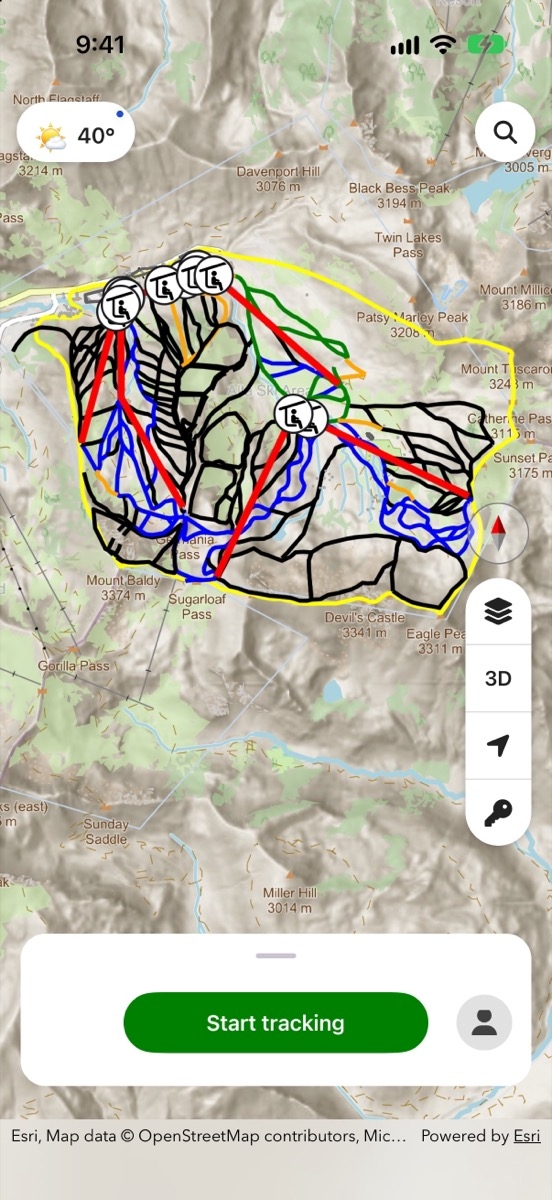
A lot of Alta's best snow is reached on foot or by traverse rather than by lift. The High Traverse leads skiers to Gunsight and Eddie's High Nowhere, and much of the mountain involves sidestepping or shuffling along a traverse to reach untracked snow. That is part of why the snow stays good for days after a storm, and part of why the skiers-only rule exists. It also means that Alta's 2,614 acres are not obvious from the lift line. The mountain is complex enough that the trail map really matters, and our Alta Ski Area trail map and resort page covers the layout and the navigation detail.
The Baldy Chutes are the bragging-rights objective. They drop off Mount Baldy, which you can see from the Collins chair. They are often closed for avalanche danger, so treat them as a bonus, not a reason to book.
Lifts people come back for
Alta runs a deliberately small lift system: Wildcat, Collins, Sugarloaf, Sunnyside and Supreme. Collins has history behind it. When Alta opened on January 15, 1939, the original Collins single chair was the fourth chairlift in America and the first in Utah. Today it serves some of the steepest slopes on the mountain.
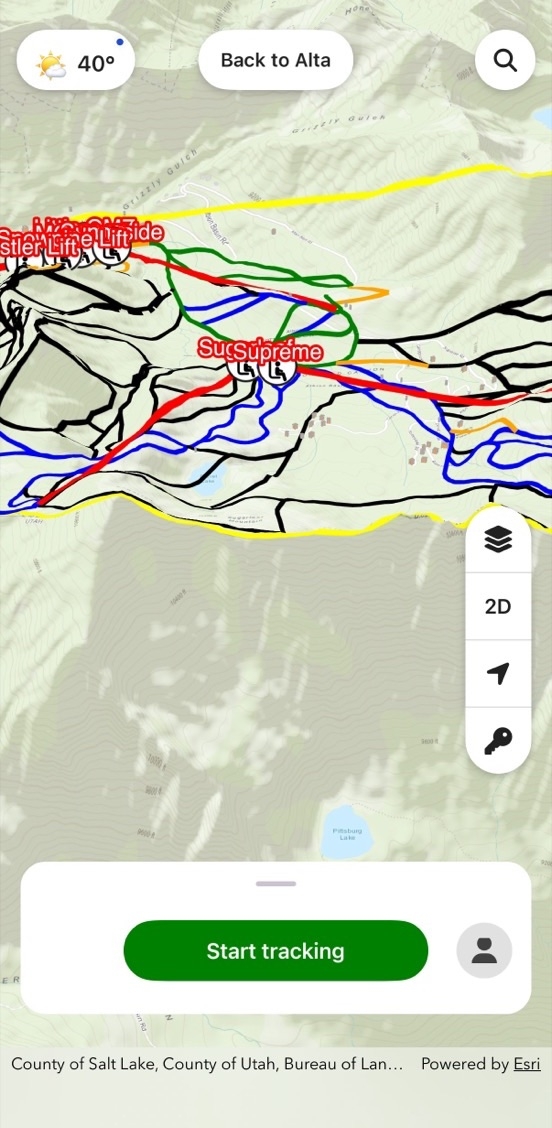
Supreme is a world of its own on the far side of the area, serving Supreme Bowl, Catherine's, East Castle and Castle Apron, along with chutes such as Piney Glade and Spiney Chutes. Sugarloaf reaches more open, steeper terrain that skis beautifully on a powder day. Both start partway up the mountain rather than at the base. Sunnyside, a high-speed six-pack added for the 2022–23 season, serves the beginner terrain at Albion.
The setting and the skiers-only culture
Alta grew out of a silver-mining town founded in 1871, and much of its ski history happened here. Within a few seasons of opening, Alta was using hand charges and artillery to trigger avalanches. Through the 1940s and 1950s, a lot of the technique for floating through deep, light snow was worked out on these slopes. The area still feels like a skier's mountain rather than a destination resort. There are no terrain parks, and no snowboards.
The skiers-only policy is the one that splits opinion. Alta's own mountain policy page is plain: snowboarding is not allowed. A group of snowboarders took the policy to federal court, and Alta won. If your group includes snowboarders, Alta is not your mountain. Next door, the Snowbird Ski Summer Resort welcomes both. If you are all on skis, though, the policy affects how the terrain is skied, how traverses hold up and the overall culture of the place.
Who Alta suits, and who it doesn't
Alta suits strong intermediates and experts who want steep, natural terrain and deep snow, and who are happy to work for it with a traverse or a short hike. It also suits families more than its reputation suggests: Alta has always seen itself as a local and family ski area, and the beginner zone near the Albion base, including runs like Crooked Mile and Home Run, is kept apart from the steep terrain.
It suits snowboarders not at all, and it is a poor fit if you want terrain parks, a big resort village, or lots of fast lifts spreading crowds across endless groomers. If your group wants something different, compare it with Park City Mountain.
Plan your visit
- When to go: Alta's high base and heavy snowfall make it one of the more reliable early-season mountains, and historically it has averaged about 96 percent open at Christmas. Its high proportion of north-facing terrain holds snow well into spring.
- Storm days: large parts of the road through Little Cottonwood Canyon and the town of Alta sit in avalanche paths. During high hazard, the town can order "interlodge," which bans outdoor travel. Build some slack into a storm-chasing plan.
- Add Snowbird: an Alta-Bird ticket or pass lets you ski between the two through the gate at the top of Sugarloaf, conditions permitting. Snowboarders crossing from Snowbird cannot enter Alta.
- Lift hours: Supreme closes earlier than Collins and Sunnyside, so do your Catherine's and Castle laps before mid-afternoon.
The one thing to do on a first visit
Ski High Rustler top to bottom. It is the line Alta is known for, right there on the frontside, and it shows what the area does best: a long, steep, fall-line run in deep, dry snow. If the snow is fresh, follow it with a lap off Supreme into Catherine's.
The verdict
Alta is worth the trip for any skier who rates snow and terrain above amenities. It has small-mountain vertical, but its snowfall, steeps and stubborn, skiers-only culture are hard to find anywhere else in North America. If anyone in your group rides a board, plan for Snowbird next door instead, or look at Brighton Resort elsewhere in the Wasatch.